
Category Archives: Main

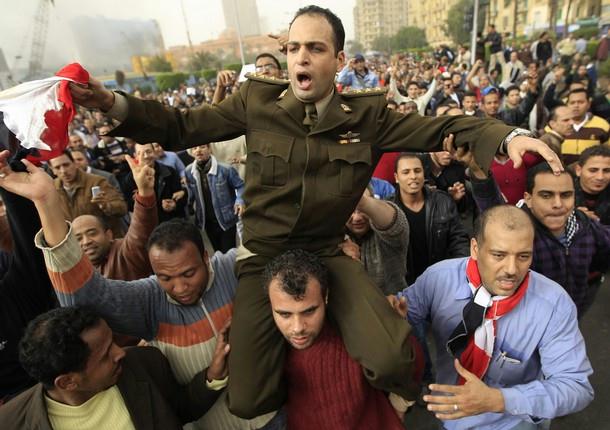
Pro Mubarak Mob attack Pro Democracy demonstrators

Tony Blair says “there should not be a rush to elections in Egypt.”

Former UK Prime Minister who is well known for supporting an illegal war in Iraq has told the Guardian that he does not think Egypt should rush for Elections.  The people of Egypt have been subjected to 30 years of brutal dictatorship under Mubarak where political opposition is banned and freedoms to speak and express yourself have been stiffled. Tony Blair also stated that the Western Governments should not feel “embarrassed” (shame) for supporting Mubarak even when those Governments have known for years that Mubarak operates a brutal Dictatorship under which the Police act directly as the arms, eyes and hears for Mubarak. Tony Blair also had this to say about Mubarak:

I have to say, he’s been immensely courageous and a force for good,”

Tony Blair describes Mubarak as ‘immensely courageous and a force for good’

Tony Blair has described Hosni Mubarak, the beleaguered Egyptian leader, as “immensely courageous and a force for good” and warned against a rush to elections that could bring the Muslim Brotherhood to power. The former British prime minister, who is now an envoy to the Israeli-Palestinian peace process, praised Mubarak over his role in the negotiations and said the west was right to back him despite his authoritarian regime because he had maintained peace with Israel. But that view is likely to anger many Egyptians who believe they have had to endure decades of dictatorship because the US put Israel’s interests ahead of their freedom.

Speaking to Piers Morgan on CNN, Blair defended his backing for Mubarak. “Where you stand on him depends on whether you’ve worked with him from the outside or on the inside. I’ve worked with him on the Middle East peace process between the Israelis and the Palestinians so this is somebody I’m constantly in contact with and working with and on that issue, I have to say, he’s been immensely courageous and a force for good,” he said. “Inside Egypt, and I have many Egyptian friends, it’s clear that there’s been a huge desire for change.”

But asked if the west had not been an obstacle to change, Blair defended the policies of his and other governments. “I don’t think the west should be the slightest bit embarrassed about the fact that it’s been working with Mubarak over the peace process but at the same time it’s been urging change in Egypt,” he said.

The Video which started a Revolution

Protesters reject Mubarak speech

Protesters have rejected a speech by President Hosni Mubarak in which he said he would not stand for re-election in September, demanding that he step down immediately. Mr Mubarak has promised to leave at the next polls, and pledged constitutional reform. Hundreds of thousands had gathered across the country in the biggest rally since protests began last week. US President Barack Obama said an orderly transition “must begin now”. In a statement after Mr Mubarak’s address, Mr Obama said the US would be happy to offer assistance to Egypt during that process. But opposition leader Mohamed ElBaradei dismissed Mr Mubarak’s move as “a trick” to stay in power, and protesters in Cairo’s Tahrir Square have vowed to continue their demonstrations until Mr Mubarak quit.

After Mr Mubarak’s announcement, some in central Cairo chanted: “We will not leave! He will leave!” Abdelhalim Kandil, leader of Egypt’s Kifaya (Enough) opposition movement, said Mr Mubarak’s offer not to serve a sixth term was not enough. “I will tell you very simply that there is an unprecedented popular movement that rejects the presence of the president on a scope that has not been seen before, that is calling for the will of the people to be imposed,” he said. If Mr Mubarak does not step down, demonstrators are planning to march on the presidential palace.

———————————————————

“The crowd went quiet as the president’s speech was projected on a huge sheet hung up on the side of an apartment building in Tahrir Square. Quickly, though, exclamations of disbelief rang out. “What, he’s still not going to leave?” said one young demonstrator, with his hand to his brow. As the speech ended, further angry cries of “irhal – go!” erupted. Protesters had made the same simple demand throughout the day. “We feel rage. He totally ignored what we were asking for,” said one man, summing up the mood. “We must be careful,” added another, thinking of how democracy activists have been treated in the past. “If Mubarak stays in power until September, he will punish us. He will torture us”. Only a few people walking away from the square after a long day of protest thought they had won significant concessions. It remains to be seen how households across Egypt will react.”

Yolande Knell BBC News, Cairo

Mubarak refuses to step down saying “I will die on Egyptian soil”

Dictators Speech

Crowds Reaction

February 2nd 2011 @ 03:33 GMT

Egyptian State TV has been showing images and video of Pro Mubarak protesters chanting Pro Mubarak slogans.  State TV has carried out little to no reporting on Anti Mubarak Protestors which is to be expected when the TV station is owned by a Dictator. Egyptians are clearly not going to give up with the Revolution with another protest march organised for this coming Friday 4th with some calling it the “Day of Ousting”.

February 1st 2011 @ 22:20 GMT

Crowds of people have started chanting “Where are the army?” has they start to demand that the Military step in and remove Mubarak from power.  Furthermore, Pro Mubarak protestors had started to enter “Liberation Square” where the majority of people against the Dictatorship where assembled.  Some protestors attempted to stop the pro Mubarak group from entering before both groups clashed.  The people believe that the Pro Mubarak group may be from the Police and Security forces.

February 1st 2011 @ 21:10 GMT

Mubarak has addressed the Egyptian people on State TV and is his second time in speaking with a nation which no longer wants him in power.  In his speech to the nation Mubarak blamed the recent Revolution on Politics.  This goes against the clear facts which show that economic problems along with a 30 year Dictatorship is what inflamed the people to revolt against this regime.  Mubarak said in his speech that he would instruct both houses of the Parliament to meet up and draw up changes to the Egyptian Constitution which would place term limits on how long a President can stand for.  Mubarak also stated that he would no stand for re-election and he expects to stay in power until the next election which takes place in months.

The Egyptian people reacted to Mubaraks speech by chanting “LEAVE” over and over shortly after his speech had ended.  The people of Egypt feel that Mubaraks concessions on Democracy and Freedom come too little too late.  The protests have since increased on the streets of Cairo and Alexandria since Mubarak made his speech.  It strongly appears that the people of Egypt will not accept anything from Mubarak who they no longer see has their leader. 

Mubarak Says He’ll Go but Not Just Yet: What Now?

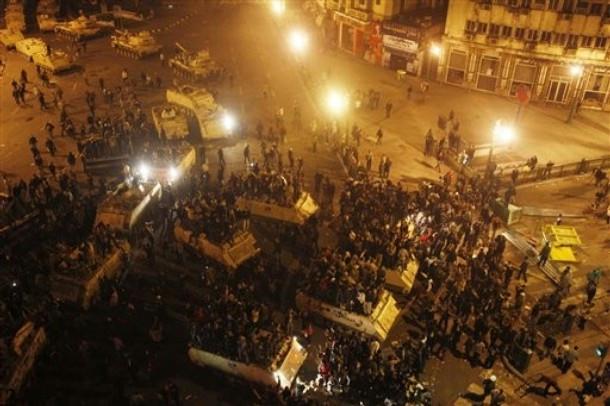
As Egypt’s extraordinary uprising edged into its second week, hundreds of thousands of people poured into Cairo’s giant Tahrir Square on Tuesday, in the biggest demonstration the country has seen in decades. Jammed into the huge open area, people waved the national flag and prayed on their knees long after dark, flaunting the nighttime curfew, as they chanted their demand for President Hosni Mubarak’s ouster with a single word: “Go!” But what will the protesters do now that it seems likely Mubarak will not “go” immediately?

By essentially stepping aside and not running for re-election in a vote that was originally scheduled for September, Mubarak may satisfy enough of a populace that has grown weary of lawlessness and shortages — enough to sap the street action of much of its power. Some political groups may even be happy if they are given Cabinet positions as part of an immediate sharing of power in a transition, further eroding opposition unity. Protesters say they — and Egypt — have been profoundly changed by the past week’s experience, and many vow to maintain their almost nonstop demonstrations until the President goes. Yet Tuesday’s street-filling crescendo may be impossible to re-create. “It is a fiasco if the situation just stays like this,” says the well-known Egyptian actor Aser Yasin, who joined Tuesday’s protest in the square. “We have already won. But it is not just about winning. It is about rising up again afterward.”


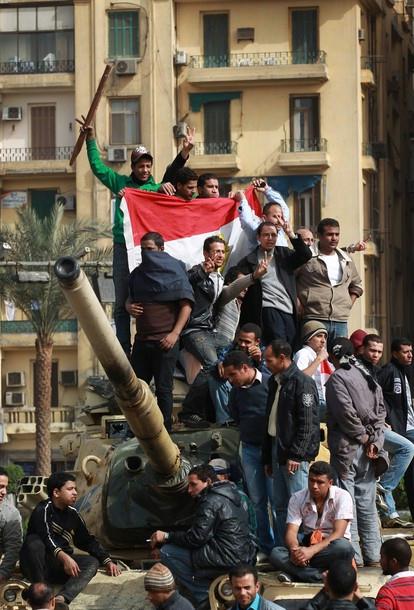
CAIRO — More than a quarter-million people flooded Cairo’s main square Tuesday in a stunning and jubilant array of young and old, urban poor and middle class professionals, mounting by far the largest protest yet in a week of unrelenting demands for President Hosni Mubarak to leave after nearly 30 years in power. According to The Guardian, one million protesters gathered at Tahrir Square. One Al Jazeera correspondent said two million attended the protests in the square and its surrounding areas. The crowds – determined but peaceful – filled Tahrir, or Liberation, Square and spilled into nearby streets, among them people defying a government transportation shutdown to make their way from rural provinces. Protesters jammed in shoulder-to-shoulder, with schoolteachers, farmers, unemployed university graduates, women in conservative headscarves and women in high heels, men in suits and working-class men in scuffed shoes. They sang nationalist songs, danced, beat drums and chanted the anti-Mubarak slogan “Leave! Leave! Leave!” as military helicopters buzzed overhead. Organizers said the aim was to intensify marches to get the president out of power by Friday, and similar demonstrations erupted in at least five other cities around Egypt.

Mubarak will not step down, but will not seek re-election, he announces on state television. He said it’s time to “ensure a peaceful transition of power” and that it’s time for “someone to be elected by the people in the coming election.”

Facebook and Twitter Used By Syrians To Incite Protests

BEIRUT — Syrians are organizing campaigns on Facebook and Twitter that call for a “day of rage” in Damascus this week, taking inspiration from Egypt and Tunisia in using social networking sites to rally their followers for sweeping political reforms. Like Egypt and Tunisia, Syria suffers from corruption, poverty and unemployment. All three nations have seen subsidy cuts on staples like bread and oil. Syria’s authoritarian president has resisted calls for political freedoms and jailed critics of his regime. The main Syrian protest page on Facebook is urging people to protest in Damascus on Feb. 4 and 5 for “a day of rage.” It says the goal is to “end the state of emergency in Syria and end corruption.”

The number of people who have joined Facebook and Twitter pages calling for protests on Friday and Saturday is still relatively small, and some are believed to live outside the country. President Bashar Assad said in an interview published Monday that his nation is immune from the kind of unrest roiling Tunisia and Egypt. He was quoted in the Wall Street Journal as acknowledging that the events signaled a “new era” in the Middle East. But he said Syria, which has gradually shed its socialist past in favor of the free market in recent years, was insulated from the upheaval because he understood his people’s needs and has united them in common cause against Israel. Social networking sites were integral to rallying protesters in Tunisia and Egypt. Facebook is banned in Syria, which makes organizing more difficult – even though many Syrians manage to access the social networking site anyway. More than 2,500 people have joined the page calling for protests on Feb. 4-5, with another 850 joining a page in favor of President Assad. Assad, a 45-year-old British-trained eye doctor, inherited power from his father, Hafez, in 2000, after three decades of authoritarian rule.

“Egypt braces for massive protest”

A massive demonstration is due to be held in Cairo as protesters step up their efforts to force President Hosni Mubarak from power. Organisers say they hope one million will come onto the streets in what is expected to be the biggest show yet. A rally is also planned in Alexandria. Egypt’s powerful army has vowed it will not use force against the protesters. Meanwhile, new Vice President Omar Suleiman says he will hold cross-party talks on constitutional reform. Mr Mubarak reshuffled his cabinet on Monday to try to head off the protests, replacing the widely despised Interior Minister Habib al-Adly. But correspondents say that the army’s statement has been a major blow for President Mubarak, and appears to have encouraged protesters. The feeling that change is coming in Egypt is getting stronger, says the BBC’s Middle East editor Jeremy Bowen in Cairo. Too much has happened too quickly to go back to the way things were before, he says.

At least 100 people have been killed across the country since protests began a week ago following an internet campaign and partly inspired by the ousting of President Zine al-Abidine Ben Ali in Tunisia last month. Egypt has since cut off internet in the country and text messaging services have been disrupted. Google announced late on Monday that it was operating a special service to allow people in Egypt to send Twitter messages by dialling a phone number and leaving a voicemail. Some protesters defied the curfew and continued to camp out in Tahrir Square through the night, saying they would stay there until Mr Mubarak’s 30-year-long rule ends. One demonstrator, Tarek Shalabi, told the BBC that groups were camped out in tents or sleeping out in the square, and described the atmosphere as “overwhelming”.

Protesters give army deadline to choose sides

Tahrir Square protesters say they plan to march Friday to the presidential palace in Heliopolis unless the army makes its stance clear. Youth-led groups issued a statement calling for all Egyptians to march on the palace, the People’s Assembly and the television building, in what they are calling the “Friday of Departure.” They say the army must choose which side they are on: That of the people, or the regime. “We the people and the youth of Egypt demand that our brothers in the national armed forces clearly define their stance by either lining up with the real legitimacy provided by millions of Egyptians on strike on the streets, or standing in the camp of the regime that has killed our people, terrorized them and stole from them,” read the statement.

The protesters say the army has until Thursday morning to make its position clear. A lack of response will be interpreted as support for Egypt’s ruling regime. The march will commence after Friday Muslim prayers and Christian services, according to the statement. Meanwhile, the liberal Democratic Front Party is expected to release a statement later on Monday calling on the military not to take part in cracking down on protesters. “We believe that the president is trying to involve the army in a confrontation with the people,” Ibrahim Nawar, official spokesman for the party, told Al-Masry Al-Youm. “In our statement we will remind the army that it is the shield of the people.” Nawar added that he expects military presence will be beefed up in Cairo and Giza to prevent large numbers of protesters from reaching Tahrir Square, which has become the central gathering area of tens of thousands of protesters for the last six days.

Egyptian Army welcomed

The British Government no longer the authority?

Air quality: Commission sends final warning to UK over levels of fine particle pollution

“The European Commission is pursuing legal action against the UK for failing to comply with EU air quality standards for dangerous airborne particles known as PM10. These particles emitted mainly by industry, traffic and domestic heating, may have negative effects on health leading to asthma, cardiovascular problems, lung cancer and premature death. A second and final written warning has been sent to the UK for still exceeding the limit values for PM10 in a number of zones.”

“First warning letters were sent at the beginning of 2009 to Member States that had not by then submitted notifications for time extensions or had not notified the Commission about all air quality zones exceeding the limit values for PM10. As a result, most Member States involved submitted notifications for a time extension.

The UK submitted an exemption request for eight zones including the Greater London Urban Area. However, the Commission did not consider the exemption justified, as seven out of the eight zones already complied with the limit values. For the Greater London Urban Area, the Commission considered that the UK had not shown that compliance with the daily PM10 limit value would be achieved by the time the exemption period expired in 2011. The UK has recently sent a further exemption request for Greater London, which is still under assessment. However, given that zones still exceed the PM10 limit values, the Commission is sending the UK a final warning. If the UK fails to take the necessary measures to comply with the legislation, the Commission could refer the case to the European Court of Justice.”

EU presses UK over London air pollution

The UK government has just weeks to convince EU officials that it will meet European clean air standards in London, if it is to avoid a court case. The European Commission is assessing UK data for London and will decide in a month’s time whether to give the UK an extension until mid-June to comply. Last June the Commission gave the UK a “final warning” over air pollution in Greater London and Gibraltar.

Egyptian Revolution?

Jan 26 to Jan 28 Pictures

Press the Continue Reading link below to see more photo’s

Continue reading

“Egypt protests leaves at least 18 dead” plus Videos of Egyptian Police attacking those they have arrested

Medical sources across Egypt late Friday evening and early Saturday reported that at least 18 people died in nationwide demonstrations aimed at ousting President Hosni Mubarak from power. It was the fourth day of continuing protests in Egypt, with reports of hundreds of thousands of citizens taking to the streets as fear of the government forces keeps diminishing.

The United Nations human rights chief Navi Pillay said that over 1,000 people have been arrested and remain detained since protests began on January 25. She called on Cairo to end its attempts to silence opposition voices. The government does not appear willing to do that just yet, as Internet services in the country are shut down, mobile phone services are cut and access to social media sites such as Facebook and Twitter remain inoperative.

…More…

Egyptian Police beating “suspects” at the Police Station

Curfew fails to stop Egypt protests – Jan 28

Thousands of protesters in the Egyptian cities of Cairo, Alexandria and Suez have defied a nighttime curfew and continued with demonstrations demanding an end to Hosni Mubarak’s 30-year presidency. Speaking on national television, the president said he had ordered the government to step down and that he would name a new government on Saturday. Military armoured vehicles rolled onto the streets of the capital on Friday night in a bid to quell the protests, but buildings have been set alight, and violent clashes continue after a day of unprecedented anger. A building belonging to the ruling National Democratic Party (NDP) was torched, and reports of looting of numerous government buildings have also emerged.

Al Jazeera’s Ayman Mohyeldin, reporting from Cairo, said that several police vehicles were also set ablaze, and firefighters did not appear to be on the streets. Before Mubarak’s announcement, Egypt’s parliamentary speaker said the president remained in control of the country despite chaos engulfing the capital and other cities. “Matters are in the safe hands of Hosni Mubarak and he will act and you will see these actions,” Fathy Surour said. Friday’s demonstrations involving tens of thousands of people were the biggest and bloodiest in four consecutive days of protests against Mubarak’s government. Al Jazeera’s Rawya Rageh, reporting from the port city of Alexandria, said that protesters there were also defying the curfew.

Mohamed ElBaradei, the former head of the United Nations’ nuclear watchdog and an opposition leader in Egypt, was briefly detained by police after he prayed at a mosque in the Giza area but he later took part in a march with supporters. The unrest in Egypt was triggered by the overthrow two weeks ago of Tunisian president Zine El Abidine Ben Ali in an uprising that has also inspired anti-government protests in Yemen and elsewhere. The government in Egypt had vowed to crack down on demonstrations and arrest those participating in them. It had blocked internet, mobile phone and SMS services in order to disrupt the planned demonstrations. Before internet access was shut down on Thursday night, activists were posting and exchanging messages using social networking services such as Facebook and Twitter, listing more than 30 mosques and churches where protesters were to organise on Friday. Ibrahim Yousri, the former head of international law at the Egyptian foreign ministry, told Al Jazeera that the government had been warned for many years to adopt reforms.

“This is effectively the beginning of the end of the regime. This government was warned to implement reforms, but they ignored calls over the years,” he said. “Most Egyptians also would not want a military government, but a temporary, or transitional government that is led by a civilian.” It is far from a foregone conclusion that the protesters will force Mubarak out. They face two key challenges, said Amon Aran, a Middle East expert at London’s City University, told Reuters news agency. “One is the Egyptian security apparatus, which over the years has developed a vested interest in the survival of President Mubarak’s regime. This elaborate apparatus has demonstrated over the past few days that it is determined to crush political dissent,” he said. “Another obstacle derives from the fact that, so far, the protesters do not seem to form a coherent political opposition. The popular outcry is loud and clear, but whether it can translate into a political force is questionable.”

US fully aware of Police Brutality in Egypt (Jan 15, 2009)

WATCH LIVE NEWS FROM EGYPT – CLICK HERE

US Diplomatic Cable (WikiLeaks)

“Summary and comment:  Police brutality in Egypt against common criminals is routine and pervasive.  Contacts describe the police using force to extract confessions from criminals as a daily event, resulting from poor training and
understaffing.  Brutality against Islamist detainees has reportedly decreased overall, but security forces still resort to torturing Muslim Brotherhood activists who are deemed to pose a political threat.  Over the past five years,
the government has stopped denying that torture exists, and since late 2007 courts have sentenced approximately 15 police officers to prison terms for torture and killings. Independent NGOs have criticized GOE-led efforts to provide human rights training for the police as ineffective and
lacking political will.  The GOE has not yet made a serious effort to transform the police from an instrument of regime  power into a public service institution.  We want to continue a USG-funded police training program (ref F), and to look for
other ways to help the GOE address police brutality.  End summary and comment.”

Torture and police brutality in Egypt are endemic and widespread.  The police use brutal methods mostly against common criminals to extract confessions, but also against demonstrators, certain political prisoners and unfortunate
bystanders.  One human rights lawyer told us there is evidence of torture in Egypt dating back to the times of the Pharaohs.  NGO contacts estimate there are literally hundreds
of torture incidents every day in Cairo police stations alone.  Egyptians are bombarded with consistent news reports of police brutality, ranging from high profile incidents such
as accidental but lethal police shootings in Salamut and Aswan this past fall (refs B and C) that sparked riots, to reports of police officers shooting civilians following disputes over traffic tickets.  In November 2008 alone, there
were two incidents of off-duty police officers shooting and killing civilians over petty disputes.  The cases against both officers are currently making their way through the judicial system.

¶3. (C) NGO and academic contacts from across the political spectrum report witnessing police brutality as part of their daily lives.  One academic at XXXXXXXXXXXX who is a member of the ruling National Democratic Party (NDP)
policy committee told us of accompanying his sister to a Cairo police station to report her stolen purse.  In front of this academic, the police proceeded to beat a female suspect
into confessing about others involved in the theft and the whereabouts of the stolen valuables.  A contact from an international NGO described witnessing police beat the doorman of an upscale Cairo apartment building into disclosing the apartment number of a suspect.  Another
contact at a human rights NGO told us that her friends do not report thefts from their apartments because they do not want to subject “all the doormen” in the vicinity to police beatings.  She told us that the police’s use of force has
pervaded Egyptian culture to the extent that one popular television soap opera recently featured a police detective hero who beats up suspects to collect evidence.

¶4. (C) Contacts attribute police brutality to poor training, understaffing and official sanction.  Human rights lawyer XXXXXXXXXXXX XXXXXXXXXXXX XXXXXXXXXX speculated that officers routinely resort to brutality
because of pressure from their superiors to solve crimes.  He asserted that most officers think solving crimes justifies brutal interrogation methods, and that some policemen believe that Islamic law sanctions torture.  XXXXXXXXXXXX commented that a culture of judicial impunity for police officers enables continued brutality.  According to XXXXXXXXXXXX, “Police officers feel they are above the law and protected by the public prosecutor.”  Human rights lawyer XXXXXXXXXXXX attributed police brutality against common criminals, including the use of electric shocks, to the problem of demoralized officers facing long hours and their own economic problems.  He asserted that the police will even beat lawyers who enter police stations to defend their clients.

Egypt severs internet connection amid growing unrest

Internet connections across Egypt appear to have been cut, as authorities gear up for a day of mass protest. Net analysis firms and web watchers have reported that the vast majority of the country’s internet has become unreachable. The unprecedented crack down will leave millions of Egyptians without internet access. There have been unprecedented protest in the country over the past few days – much of it co-ordinated via the web. According to internet monitoring firm Renesys, shortly before 2300 GMT on 27 January virtually all routes to Egyptian networks were simultaneously withdrawn from the internet’s global routing table. That meant that virtually all of Egypt’s internet addresses were unreachable. Egyptian authorities seem to have manged this by shutting down official Domain Name Servers (DNS) in Egypt. These act as address books and are consulted by web browsing software to find out the location of a site a user wants to visit. Messages circulating in Egypt pointed people towards unofficial DNS servers so they could get back online.