Category Archives: Main

Tottenham Riots – August 7

Continue reading

Riots in Tottenham spread across London

Tottenham riots: police let gangs run riot and loot

August 7, 2011

Britain’s biggest police force is facing criticism after it let looters run riot in north London for almost 12 hours, in some of the worst scenes of street disturbances seen in recent years. The Metropolitan Police said it was focused on containing violent disorder in Tottenham on Saturday night, which left dozens of officers injured and saw squad cars, shops and flats burned to the ground. But its tactics meant gangs of youths were free to break into stores at nearby Tottenham Hale retail park and in Wood Green, with looters forming an orderly queue in broad daylight to steal from a sports shop.

Continue reading

Libyan rebels abuse of PoW’s and Civilians while NATO bombs civilian targets

Libyan rebels abused civilians: Human Rights Watch

July 13, 2011

he campaign group, Human Rights Watch, has accused rebels in Libya of looting, arson and the abuse of civilians. Observers from the New York-based group say they have witnessed some incidents themselves, and have interviewed witnesses to others in territory recently seized by rebels. A rebel spokesman talking to reporters in Brussels has denied the allegations.

VIDEO LINK – Libyan rebels behead Libyan Soldier – VIDEO LINK

Accusations of abuse by both sides have circulated since the rebellion against Col Muammar Gaddafi began in February. The latest allegations focus on four towns seized by rebels in the west of the country in the last month: al-Awaniya, Rayayinah, Zawiyat al-Bagul and al-Qawalish. “The rebel conduct was disturbing,” said Fred Abrahams, a special adviser to Human Rights Watch (HRW). “We documented fairly widespread looting of homes and shops, the burning of some homes of suspected Gaddafi supporters and – most disturbingly – the vandalisation of three medical clinics [and] local small hospitals, including the theft of some of the medical equipment.”

He said the Libyan government had committed more serious crimes, but that did not excuse the behaviour of the rebels. “Our aim is to hold all combatants, all militaries – whether they’re organised and states and governments or rebels groups – to the same standards, and it’s very much also a warning shot across the bow, because of these other areas they are approaching. We’re deeply worried about how they might behave and treat civilians in those areas.”

VIDEO LINK – Libyan Protestors and Rebels hang and behead soldier – VIDEO LINK


>>> CLICK HERE TO CONTINUE <<<

The Olympic Message

Boris on drugs: I took cocaine but it had no effect on me

June 4, 2007

In a characteristically colourful interview, Boris Johnson has confessed to incompetently snorting cocaine, and admitted he finds Cherie Blair sexually enticing. Speaking to former Daily Mirror editor Piers Morgan in GQ magazine, Mr Johnson,42, said of the cocaine episode: “I tried it at university and I remember it vividly. It achieved no pharmacological psychotropic or any other effect on me whatsoever.”

It is not the first time that the shadow education minister has admitted trying cocaine. He had previously said while appearing in the television show Have I Got News For You “I think I was once given cocaine but I sneezed and so it did not go up my nose. In fact, I may have been doing icing sugar.” Asked in the GQ interview whether any of the Class A drug went up his nose despite the sneeze, Mr Johnson responded ” It must have done, oh yes, but it didn’t do much for me I can tell you.”

He was also asked whether he had inhaled cannabis. ” There was a period before university when I had quite a few (joints). But, funnily enough, not much at university. It was jolly nice. But apparently it is very different these days, much stronger. I have become very illiberal about it. I don’t want my kids to take drugs”, said the MP who was sacked from a front-bench post by then leader Michael Howard after having an extra-marital affair exposed in Sunday paper. Asked by Mr Morgan whether he could imagine having sex with the Prime Minister’s wife, he said ” I could, yeah. No, don’t put that in! God! Not me.”

June 2, 2011

June 9, 2011

Who do you want to be?

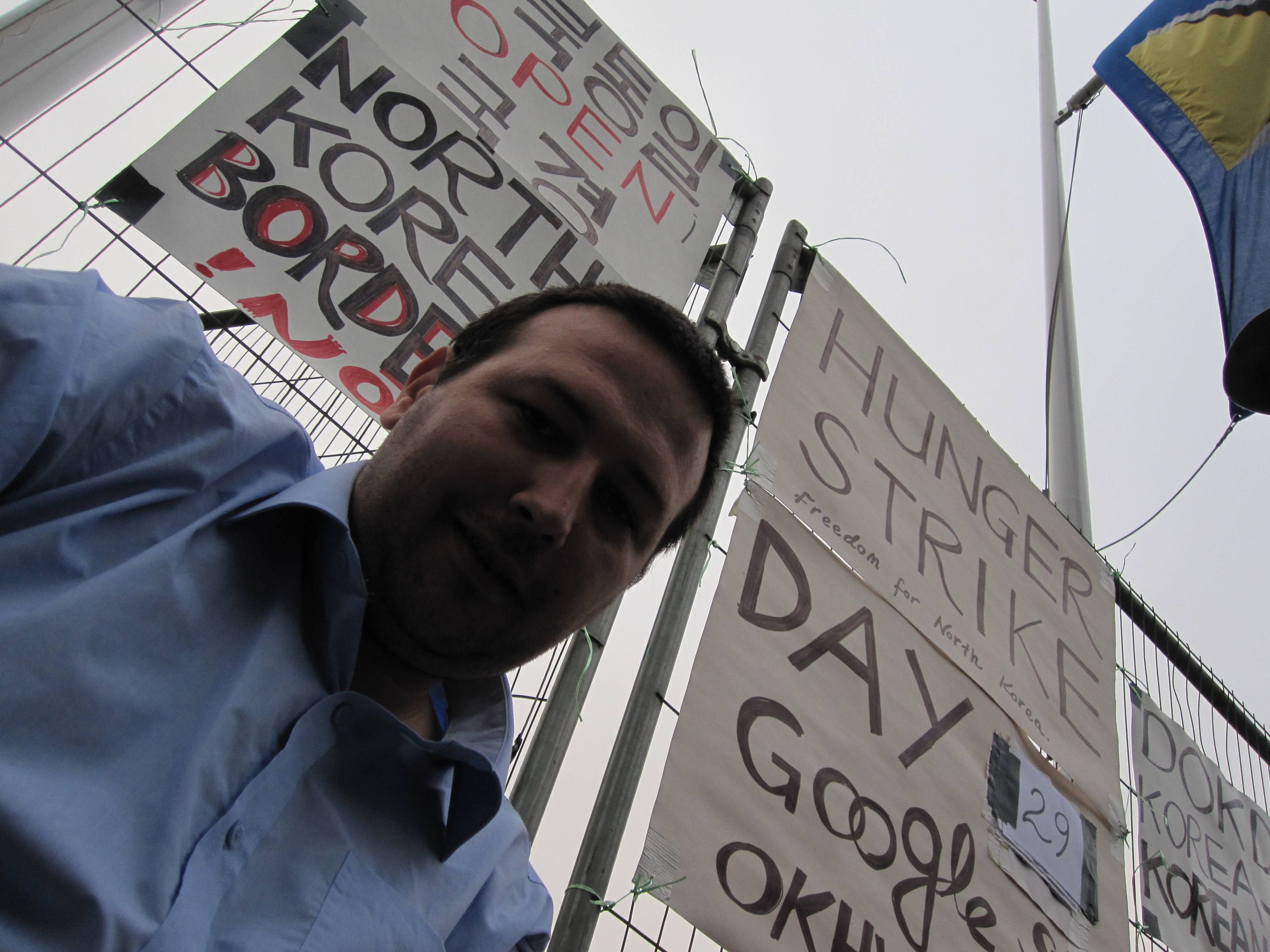
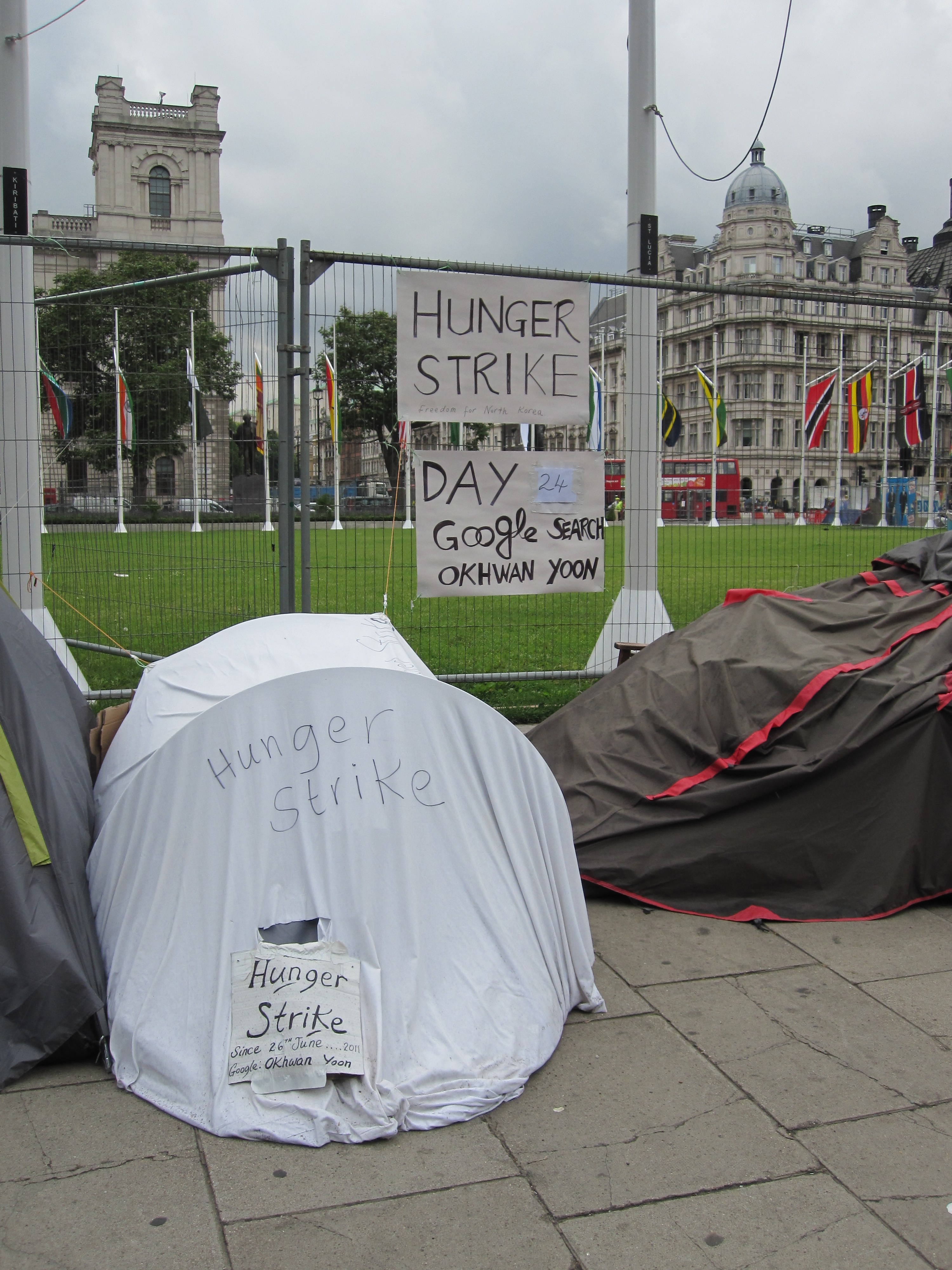
Okhwan Yoon Interview (Day 17) – July 13, 2011

———————————————————–


(Day 29 – July 25, 2011)

(Day 27 – July 23, 2011)

(Day 8 – July 4, 2011)

Chilcot – The illegal war and its cover up

Okhwan Yoon on Hunger Strike (Day 24)

Okhwan Yoon on Hunger Strike (Day 24) July 20, 2011

Contact: okhwanstory@gmail.com – 07907 233 861

Rupert Murdoch and the Corrupt Met Police
 

First Named Hack to Expose Andy Coulson Found Dead

News of the World phone-hacking whistleblower found dead

July 18, 2011

Sean Hoare, the former News of the World showbiz reporter who was the first named journalist to allege Andy Coulson was aware of phone hacking by his staff, has been found dead, the Guardian has learned. Hoare, who worked on the Sun and the News of the World with Coulson before being dismissed for drink and drugs problems, is said to have been found dead at his Watford home. Hertfordshire police would not confirm his identity, but the force said in a statement: “At 10.40am today [Monday 18 July] police were called to Langley Road, Watford, following the concerns for the welfare of a man who lives at an address on the street. Upon police and ambulance arrival at a property, the body of a man was found. The man was pronounced dead at the scene shortly after.

“The death is currently being treated as unexplained, but not thought to be suspicious. Police investigations into this incident are ongoing.” Hoare first made his claims in a New York Times investigation into the phone-hacking allegations at the News of the World. He told the newspaper that not only did Coulson know of the phone hacking, but that he actively encouraged his staff to intercept the phone calls of celebrities in the pursuit of exclusives. In a subsequent interview with the BBC he alleged that he was personally asked by his then-editor, Coulson, to tap into phones. In an interview with the PM programme he said Coulson’s insistence that he didn’t know about the practice was “a lie, it is simply a lie”.

At the time a Downing Street spokeswoman said Coulson totally and utterly denied the allegations and said he had “never condoned the use of phone hacking and nor do I have any recollection of incidences where phone hacking took place”. Sean Hoare, a one-time close friend of Coulson’s, told the New York Times the two men first worked together at the Sun, where, Hoare said, he played tape recordings of hacked messages for Coulson. At the News of the World, Hoare said he continued to inform Coulson of his activities. Coulson “actively encouraged me to do it”, Hoare said. In September last year, he was interviewed under caution by police over his claims that the former Tory communications chief asked him to hack into phones when he was editor of the paper, but declined to make any comment.

Hoare returned to the spotlight last week, after he told the New York Times that reporters at the News of the World were able to use police technology to locate people using their mobile phone signals in exchange for payments to police officers. He said journalists were able to use a technique called “pinging” which measured the distance between mobile handsets and a number of phone masts to pinpoint its location.

Rupert and James Murdoch prepare for perilous performance before MPs

July 18, 2011

It seems fair to say that the stakes could not be higher for Rupert and James Murdoch when they appear in front of 11 members of parliament at 2.30pm on Tuesday. Their appearance, scheduled to last an hour, will not only be scrutinised by the world’s media but will also be pored over by criminal investigators and investors looking for signs of culpability from one of the world’s most powerful media owners and his heir apparent. Next up in front of the MPs will be Rebekah Brooks, former chief executive of News International, the newspaper business that owned the News of the World, who is to give evidence after her resignation on Friday and arrest two days later.

The scale of the crisis saw the two men locked in meetings with their advisers over the weekend and all day on Monday, preparing for a performance that could have devastating consequences for News Corp, which owns three national newspapers in the UK as well as the Fox film and television network and a 39% stake in the satellite business BSkyB. Not only has the scandal prompted the resignations of two of the most senior people in the company but it has also brought down two of the most senior police chiefs and led to 10 arrests.

So what can we expect? John Whittingdale, chairman of the media and culture select committee who summonsed the pair, said his team would be looking for answers in the phone-hacking scandal such as: how widespread was it? How long has it been going on? Who knew about it? These questions may seem straightforward but, as James Murdoch pointed out in his letter finally accepting the summons (he had earlier tried to delay the appearance), he could be constrained legally.

Now it is David Cameron’s turn to be transparent

July 18, 2011

Theresa May, the Home Secretary, appeared not to foresee any difficulties yesterday when she announced an inquiry into alleged police corruption and “nepotism”. Following the resignation of two of the country’s most senior officers, she has asked HM Inspector of Constabulary to consider the propriety of the media’s relationship with the police. This follows the appointment of Neil Wallis, a former News of the World deputy editor, as a PR adviser to the Metropolitan Police.

But if this was supposed to demonstrate a reassuring grasp of events, it failed. It had all the appearance of yet another cobbled-together proposal, intended to stem a crisis that threatens to engulf the Government. What began two weeks ago with the shocking revelation that News of the World journalists, or a private detective acting for them, hacked into the phone of the missing teenager Milly Dowler, who was later found murdered, has developed into an all‑consuming political calamity – and, with the death of Sean Hoare, the whistleblower, a human tragedy. David Cameron last week called it a firestorm and he was right. Firestorms are unpredictable in their trajectory and hard to put out. The flames are now licking at the door of No 10.

So far, the inferno has claimed the jobs of a number of significant players. Mr Cameron’s press spokesman Andy Coulson resigned in January when fresh allegations were made about the extent of the phone hacking carried out at the newspaper he once edited. In the past fortnight, Rebekah Brooks, the chief executive of News International (NI), and Les Hinton, the company’s former chairman, have both resigned. They have been followed by Sir Paul Stephenson, the Commissioner of the Met, and by his assistant, John Yates. All have protested their innocence; all say they did not fully appreciate what was taking place; yet all felt that they were left with no option but to go.

The NI executives’ continued presence risked damaging the reputation and financial interests of Rupert Murdoch’s News Corp. The police chiefs quit because the failure to investigate properly the hacking, combined with other allegations, has undermined the credibility of the Met. The next 12 months are crucial for the force as London prepares to host the Olympics, and preparations are made for the Queen’s Diamond Jubilee. Which takes us back to Mrs May’s Commons statement: if there is to be an inquiry into police links with the media, why is the Government – and the Prime Minister in particular – apparently exempt from such forensic scrutiny? Mr Cameron has made much of the importance of “transparency” in this affair, a point he repeated on his now-truncated trip to South Africa yesterday. “The British Government has taken all of the appropriate action,” he said. “I have been out there in Parliament and in press conferences, fully answering the questions, fully transparent, very clear about what needs to be done.”

Question Everything