#GCHQ illegally obtained users phone and email records judges rule

Privacy International

Did GCHQ illegally spy on you?

Have you ever made a phone call, sent an email, or, you know, used the internet? Of course you have!

Chances are, at some point over the past decade, your communications were swept up by the U.S. National Security Agency’s mass surveillance program and passed onto Britain’s intelligence agency GCHQ. A recent court ruling found that this sharing was unlawful but no one could find out if their records were collected and then illegally shared between these two agencies… until now!

CLICK HERE TO FIND OUT

SOURCE = Privacy International

74cc8-guardian_logo

Mobile phones hacked: can the NSA and GCHQ listen to all our phone calls?

February 20, 2015

The latest revelations from the NSA files have shown that US and UK surveillance agencies could have the ability to listen in on billions of mobile phone calls from around the world. But how can they do that, and what does it mean for the general public? And should you be worried?

What’s happened?

The biggest manufacturer of Sim cards in the world has reportedly been hacked into by the US NSA and UK GCHQ.

The security agencies stole the encryption keys that are built into every one of the Sim cards made by the Dutch firm Gemalto.

What is a Sim card?

The Subscriber Identity Module (Sim) card is the small chip placed into almost every mobile phone in the world that allows the phone to connect securely to the mobile phone service provider. It is essentially the key that logs the user into the mobile phone network allowing calls, text and data access.

The secure handshake between the network and the sim encrypts all communications going between the mobile phone and the network.

What does this mean?

With the encryption keys for Gemalto Sim cards, the US and UK security services can potentially listen in on any conversation across any network that uses the compromised Sim cards.

How could they listen in?

The keys allow the security services to decrypt voice communications sent between a mobile phone and a mobile mast, which carries the call to the recipient. To pick up the call they can use an aerial placed in the vicinity of the caller. They will have to be relatively close to the mobile phone user, but an aerial could be placed anywhere and would not have to be visible.

Is this legal?

There is no doubt that the security firms would have breached Dutch law. If the keys are used to listen into conversations, it is likely to be a violation of data protection laws in most countries.

Where has this information come from?

The revelations of the hack come from the NSA files supplied by Edward Snowden and reported on by Glen Greenwald’s The Intercept. The files reveal the extent of the breach and that Gemalto was targeted by the Mobile Handset Exploitation Team (MHET), a unit formed by the NSA and GCHQ in April 2010 to target vulnerabilities in mobile phones.

Visit the Source for more on this story

SOURCE = The Guardian

Mirror

GCHQ spooks ILLEGALLY spied on millions of Brits, judges confirm in shock ruling

February 6, 2015

GCHQ spooks illegally spied on millions of Brits using a top secret American electronic snooping system, judges have ruled. British secret services broke human rights law after allowing the US National Security Agency to spy on our citizens’ private communications, the secretive Investigatory Powers Tribunal confirmed today. It is understood America first began harvesting details of Brits’ internet use in 2007, when its controversial PRISM and Upstream surveillance systems were rolled out. GCHQ spies were allowed access to all the secretly snaffled information after striking an illegal deal with the US. This is the first time the shadowy tribunal has ever ruled against GHCQ, which is home to MI5 and MI6. However, spooks have had free reign to snoop since December last year, when the tribunal said electronically spying on Britons did not contravene our human rights.

James Welch is legal director for Liberty, one of the privacy groups which launched legal proceedings against GCHQ. He said: “We now know that, by keeping the public in the dark about their secret dealings with the National Security Agency, GCHQ acted unlawfully and violated our rights.” Eric King, deputy director of Privacy International, said spooks have engaged in an “illegal mass surveillance sharing programme that has affected millions of people around the world”. “For far too long, intelligence agencies like GCHQ and NSA have acted like they are above the law,” he continued. “We must not allow agencies to continue justifying mass surveillance programmes using secret interpretations of secret laws.”

Visit the Source for more on this story

SOURCE = The Mirror

Mirror

Did GCHQ illegally spy on your emails and phone calls? Use this tool to find out

February 16, 2015

Are you worried that intelligence agencies may have been illegally spying on you? Consumer group Privacy International has created a tool to let you easily find out whether GCHQ targeted your communications. The tool has been developed in the response to a ruling that GCHQ unlawfully spied on British citizens by allowing the US National Security Agency to harvest all of our data and then share it with UK spooks. This was taking place for years, up until December 2014. The ruling means that ANYONE around the world can ask the spy agency if their records were unlawfully shared by the NSA.

Privacy International will collect all of the requests – which involve entering in your name, email address and phone number – from around the world and then submit them to the UK Investigatory Powers Tribunal. If it turns out you HAVE been illegally spied on, you can then request that your records – including emails, phone records and internet communications – are deleted. The recent ruling was actually the first time in the Investigatory Powers Tribunal’s history that it had ruled AGAINST the actions of security services.

Visit the Source for more on this story

SOURCE = The Mirror

skynews_hd_logo

Spies ‘Hacked’ SIM Cards To Listen To Calls

February 20, 2015

British and American spies stole the encryption keys from the largest SIM card manufacturer in the world to eavesdrop on calls, a US news website says. Calls made on the 3G and 4G networks are encrypted – but by stealing the keys, intelligence agencies were able to monitor mobile phone communications without the permission or knowledge of customers, phone companies and foreign governments. The UK intelligence agency Government Communications Headquarters (GCHQ) teamed up with the US’ National Security Agency (NSA) to target Dutch SIM card manufacturer Gemalto.

The company creates around two billion SIM cards annually for 450 wireless networks around the world. It is believed that employees of Gemalto had their emails penetrated after being contacted via Facebook. In one GCQH slide cited by The Intercept, the agency said it had access to Gemalto’s “entire network”. A spokesman for Gemalto said the firm will “devote all resources necessary” to understand the “sophisticated techniques” used to get the SIM card data.

Visit the Source for more on this story

SOURCE = Sky News

The Independent

Sim card database hacked: NSA and GCHQ stole details to listen in on phone calls

February 20, 2015

British and American spies hacked the biggest Sim card manufacturer in the world, allowing them to listen in on much of the world’s phone communications. Gemalto, the company targeted by the hack, makes 2 billion Sim cards per year for 450 networks in most large countries around the world. Users would have no idea that their phone calls and data had been intercepted, and the breach appears to have been in effect for years. The NSA and GCHQ broke into Gemalto to find the encryption keys for Sim cards, the small cards put in phones to allow them to access cellular networks. That gave them full access to communications, according to a GCHQ document leaked by Edward Snowden and reported by The Intercept. The keys allow the intelligence agencies to listen in on communications without getting approval from either telecom companies or the governments of the people that they are listening in on.

Visit the Source for more on this story

SOURCE = The Independent

e0dfb-logo-belfast

GCHQ and NSA ‘hacked Dutch company’

February 20, 2015

GCHQ and the NSA hacked into the networks of Netherlands-based Gemalto, to steal the codes, according to the documents given to journalists by NSA whistleblower Edward Snowden. A story posted on the website The Intercept offered no details on how the intelligence agencies employed the eavesdropping capability – providing no evidence, for example, that they misused it to spy on people who were not valid intelligence targets. But the surreptitious operation against the world’s largest manufacturer of mobile phone data chips is bound to stoke anger around the world. It fuels an impression that the NSA and its British counterpart will do whatever they deem necessary to further their surveillance prowess, even if it means stealing information from law-abiding Western companies.

The targeted company, Gemalto, makes “subscriber identity modules,” or SIM cards, used in mobile phones and credit cards. One of the company’s three global headquarters is in Austin, Texas. Its clients include AT&T, T-Mobile, Verizon and Sprint, The Intercept reported. The Intercept offered no evidence of any eavesdropping against American customers of those providers, and company officials told the website they had no idea their networks had been penetrated. Experts called it a major compromise of mobile phone security. The NSA did not respond to a request for comment. In the past, former agency officials have defended using extra-legal techniques to further surveillance capabilities, saying the US needs to be able to eavesdrop on terrorists and US adversaries who communicate on the same networks as everyone else.

Visit the Source for more on this story

SOURCE = The Belfast Post

bbc

US and UK accused of hacking Sim card firm to steal codes

February 20, 2015

US and British intelligence agencies hacked into a major manufacturer of Sim cards in order to steal codes that facilitate eavesdropping on mobiles, a US news website says. The Intercept says the revelations came from US intelligence contractor turned whistleblower Edward Snowden. The Dutch company allegedly targeted – Gemalto – says it is taking the allegations “very seriously”. It operates in 85 countries and has more than 40 manufacturing facilities. The Intercept says that “the great Sim heist” gave US and British surveillance agencies “the potential to secretly monitor a large portion of the world’s cellular communications, including both voice and data”.

It says that among the clients of the Netherlands-based company are AT&T, T-Mobile, Verizon, Sprint and “some 450 wireless network providers around the world”. The Intercept alleges that the hack organised by Britain’s GCHQ and the US National Security Agency (NSA) began in 2010, and was organised by operatives in the “Mobile Handset Exploitation Team”. Neither agency has commented directly on the allegations. However GCHQ reiterated that all its activities were “carried out in accordance with a strict legal and policy framework which ensures that our activities are authorised, necessary and proportionate”.

Visit the Source for more on this story

 SOURCE = BBC News
RT

#DidGCHQSpyOnYou? Privacy rights group to ask on your behalf

February 20, 2015

Privacy International has launched a website offering to help people discover whether British spy agency GCHQ illegally obtained their data from their US counterpart the NSA. Participants submit their name and email address to Privacy International. Their details will then be sent to GCHQ and the Investigatory Powers Tribunal (IPT) as part of a large-scale inquiry. The campaign follows a ruling by the IPT earlier this month that judged intelligence sharing between the US and UK prior to December 2014 was unlawful because the public were unaware they were being spied on. A Privacy International spokesman told RT the campaign had already struck a chord, with over 6,000 people signing up in the first 24 hours. More than 1,000 Twitter messages have used the #DidGCHQSpyOnYou hashtag as of Tuesday afternoon according to social media analysis service Hashtracking, including influential American hacker Jacob Appelbaum.

Privacy International said the campaign is not limited to British citizens, but open to anyone in the world. “Given the mass surveillance capabilities of the NSA and GCHQ, and that the agencies ‘share by default’ the information they collect, an unlimited number of people could have been affected by the unlawful spying,” Privacy International said in a press statement. If participants discover they are the victim of illegal spying, they can request their records are deleted. This could apply to emails, phone records and internet communications. Ironically, however, participants will need to pass their information to GCHQ. Privacy International concedes this “sounds absurd,” but explain the IPT “needs people to come forward to file complaints.”

Visit the Source for more on this story

SOURCE = Russia Today

Reprieve

In wake of GCHQ ruling, IPT must act on Govt snooping on lawyers

February 6, 2015

The UK’s Investigatory Powers Tribunal (IPT) has today ruled that mass-surveillance of the internet by intelligence agency GCHQ before December 2014 was unlawful. The case marks the first time that the highly-secretive IPT has ever ruled against the intelligence services in its entire, 15-year existence. Legal charity Reprieve is due to go before the Tribunal next month concerning Government surveillance of confidential – or ‘legally privileged’ – communications between lawyers and their clients. The principle of legal privilege is a long-standing one in UK law, and is crucial to ensuring a fair trial.

The cases have been brought on behalf of the victims of two separate CIA “rendition” operations in which the UK was heavily involved: both cases involve anti-Gaddafi dissidents and their families – including a pregnant woman and four children aged 12 and under. The Belhaj and al Saadi families were both kidnapped and ‘rendered’ to Libya in 2004, where Mr Belhaj and Mr al Saadi were tortured. The UK government will soon be defending the case in the Supreme Court, and has failed to provide sufficient assurances that it is not snooping on the private legal conversations between the men and their lawyers.

Visit the Source for more on this story

SOURCE = Reprieve

Updated – Police News

BBC News

Police commander sacked over ‘sensitive leak’

January 16, 2015

Det Ch Supt Andy Rowell

Det Ch Supt Andy Rowell

A London police borough commander has been sacked by a disciplinary panel for giving details of a “sensitive” police investigation to a journalist. Det Ch Supt Andy Rowell was dismissed without notice after a disciplinary panel found allegations of gross misconduct against him had been proven. The panel heard he had let a journalist copy a statement containing details from a serious crime investigation. The ex-Ealing commander’s behaviour “lacked integrity”, it ruled.

The abuse of his position could have “brought discredit on the police service”, the panel added. Mr Rowell was originally arrested by detectives from Operation Elveden – the operation investigating corrupt payments to public officials. His arrest came after information was passed to the police by News International’s management and standards committee in the wake of the phone hacking scandal.

=====================================================

CLICK HERE FOR MORE NEWS

=====================================================


Terrorism in Paris, France

telegraph

Charlie Hebdo attack: France’s worst terrorist attack in a generation leaves 12 dead

January 7, 2015

With ruthless precision, two masked al-Qaeda gunmen calmly fire eight shots at an unarmed policeman as a terrorist attack of “indescribable barbarity” nears its end. Moments after this image was taken, the policeman, lying mortally wounded on the pavement of a Parisian boulevard, held up a hand in a plea for mercy. A second later, one terrorist jogged past and shot him in the head without breaking stride, just one more act of brutality in an attack that left 12 dead. Earlier two gunmen armed with automatic rifles stormed the office of the satirical magazine Charlie Hebdo, a target for Islamist terrorists since it printed cartoons of the Prophet Mohammed in 2006 and 2011, and killed cartoonists and satirists whose names were called out as they were shot dead in turn.

“We have avenged the Prophet!” the killers shouted in accentless French as they left the building, having identified themselves as acting on behalf of “al-Qaeda in Yemen”. France’s worst terrorist attack in a generation was also its most meticulously planned; the killers had not only memorised the names of those they wanted to kill, they also planned their getaway well enough to evade the police. A nationwide manhunt is now underway after a raid in Reims proved fruitless. The killers were named in the French media as Said and Chérif Kouachi, brothers aged 34 and 32, and Hamid Mourad, 18. Chérif was reportedly part of an Iraqi jihadist network dismantled in the nearby 19th arrondissement. He was jailed for three years on terror charges in May 2008.

Happy Belated New Year

Some of you may have noticed the lack of content being posted here over the last two months. I had been engaged with other business which had taken up all my time but my situation has now changed and I will be aiming to keep the site updated at least 3 times a week. These dates will be Monday, Wednesday and Saturday.

I hope everyone enjoyed Christmas and the New Year and that you continue to have a great New Year.

Many regards

James Newman

News Updates – November 10th 2014

Russia Herald

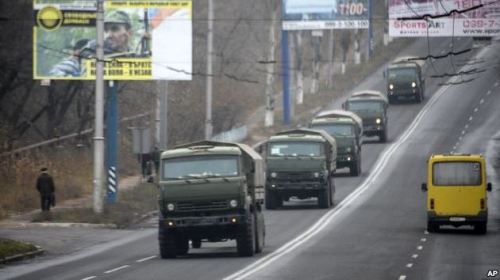
US Alarmed Over Reports of Russian Buildup in E. Ukraine

uni1415585452

——————————————————————————————–

CLICK HERE FORE MORE NEWS ON UKRAINE

——————————————————————————————–

International Business Times

Israel: Arabs in Favour of Palestinian State ‘Can Move to Gaza’ says PM Netanyahu

Israeli Arabs who are against Israel and in favour of the creation of a Palestinian state can move to Palestinian territory or Gaza, Israel’s Prime Minister has said. Benjamin Netanyahu made the comment after a Palestinian man stabbed an Israeli soldier in Tel-Aviv. Police said it could be a possible terrorist attack. “To all those who demonstrate against Israel and in favour of a Palestinian state, I say something simple: I invite you to move there; we won’t give you any problem,” Netanyahu said, during a meeting of the Likud Knesset faction. “The terrorists incite and want to evict us from everywhere,” he said. “They don’t want us in Jerusalem, not in Tel Aviv and not anywhere”.

——————————————————————————————–

CLICK HERE FORE MORE NEWS ON ISRAEL

——————————————————————————————–

Thomson Reuters Foundation

Egypt considers tighter curbs on media coverage of military

CAIRO, Nov 10 (Reuters) – Egypt is drafting a law tightening restrictions on media coverage of the armed forces, government and judicial sources said, alarming journalists who believe this would end three years of relative press freedom. One source played down any threat to freedoms won after the 2011 overthrow of autocrat Hosni Mubarak, saying legislation under discussion would restrict only reporting that endangers national security while Egypt fights Islamist militants. But journalists fear that if implemented, it would end general coverage of the military which as the main pillar of the Egyptian state wields major political and economic influence.

——————————————————————————————–

CLICK HERE FORE MORE NEWS ON EGYPT

——————————————————————————————–

Thomson Reuters Foundation

Syria’s Assad says UN envoy’s local ceasefire bid “worth studying” -state media

BEIRUT, Nov 10 (Reuters) – Syrian President Bashar al-Assad said on Monday that a proposal by an international peace mediator to implement local ceasefires starting in the northern city of Aleppo was “worth studying”, state media said. United Nations Syria mediator Staffan de Mistura has cited the northern city of Aleppo as an obvious candidate for “incremental freeze zones” to stop localised fighting and allow better access to aid. “(Assad) considered the de Mistura initiative worth studying and trying to work on in order to attain its aims to return security to the city of Aleppo,” the state news agency said.

——————————————————————————————–

CLICK HERE FORE MORE NEWS ON SYRIA

——————————————————————————————–

“Gaza Strip: 2-Year-Old Girl and Woman Killed in Israeli Airstrike as Ceasefire Falters”

International Business Times

August 19, 2014

A two-year-old Palestinian girl and a woman, 40, are believed to have become the first fatalities of the Gaza conflict since the ceasefire began to falter. According to Ashraf al Kidra, a spokesman for local emergency services, both victims died when a house was destroyed by a blast in Gaza City. Thousands of Gaza residents are said to have fled to shelters as Israel launched its assault. Israel says it responded following rockets launched by militants from Gaza. Two were shot down by the Iron Dome defence system and one is said to have landed in Tel Aviv but caused no injuries. Israeli spokesman Mark Regev said: “This rocket attack was a grave and direct violation of the ceasefire. The Cairo talks were based on an agreed premise of a total cessation of hostilities. When Hamas breaks the ceasefire, they also break the premise for the Cairo talks. Accordingly, the Israeli team has been called back.”

———————————————————————————————–

CLICK HERE FOR MORE NEWS ON ISRAEL

———————————————————————————————–

“Gaza crisis: 13 Israeli soldiers, scores of Gazans killed”

bbc

July 21, 2014

Israel and Gaza have both suffered their bloodiest day since the beginning of the current offensive. Israel says that 13 of its soldiers died since Saturday night, the biggest one-day loss for its army in years. At least 87 Gazans were reported killed on Sunday – 60 of them in the district of Shejaiya alone. The total death toll in Gaza now stands at more than 425. Hamas said on Sunday evening that it had captured an Israeli soldier, but Israel has issued a denial. “There’s no kidnapped Israeli soldier and those rumours are untrue,” said Israel’s UN ambassador Ron Prosor. Celebratory gunfire and shouts could be heard in Gaza City after the claim was made. Sunday’s death toll for the Israel Defense Forces (IDF) is higher than that sustained by the IDF during the entire three-week duration of Operation Cast Lead in 2008-2009, the last time that Israel sent ground troops into Gaza.

It brings the number of Israeli soldiers killed in the current offensive to 18. The deaths of so many soldiers on a single day will shock Israeli society, the BBC’s Chris Morris reports from southern Israel. Israeli Prime Minister Benjamin Netanyahu vowed to continue operations in Gaza “as much as we need to” despite the casualties. He said the Israeli government felt “deep pain” over deaths of its soldiers, and that Hamas, not Israel was responsible for the escalation in Gaza. The UN Security Council is due to meet on Sunday evening in emergency session to discuss the situation. US Secretary of State John Kerry is due to travel to the Egyptian capital Cairo on Monday to support regional efforts to reach a ceasefire.

——————————————————————————————————–

CLICK HERE FOR MORE NEWS ON ISRAEL

——————————————————————————————————–

Russian Seizes Authority Over Ukraine Rebels

New York Times

July 10, 2014

SLOVYANSK, Ukraine — Late one afternoon last month, as separatist militia fighters and Ukrainian forces exchanged fire, a small-time thief by the name of Aleksei B. Pichko left his home on the southern edge of Slovyansk and headed for an abandoned residence at 17 Sadovaya Street. He had been drinking, and wanted to “see what could be stolen from there,” according to documents recovered at the rebel headquarters after their retreat over the weekend. Mr. Pichko, 30, never returned. An order signed and stamped by the rebels’ powerful commander, Igor Strelkov, detailed Mr. Pichko’s fate: death by firing squad for pilfering a pair of pants and two shirts. “They told me they took him to the S.B.U.,” said his mother, Maria Pichko, referring to the headquarters in this former separatist stronghold. “I don’t know anything more.”

The death sentence makes reference to a Stalin-era Soviet law, and in it Mr. Strelkov warns ominously that crimes “committed in the zone of military activity will continue to be punished ruthlessly and decisively.” Mr. Strelkov, a native Muscovite whose real name is Igor Girkin, is a figure as mysterious as he is fearsome. On Thursday, he made his first public appearance after months of fighting, attending a news conference in the provincial capital of Donetsk alongside Alexander Borodai, another Russian citizen leading the uprising here.

—————————————————————————————————

CLICK HERE FOR MORE NEWS ON UKRAINE

—————————————————————————————————

Ukraine unrest: Dozens die as Donetsk airport retaken – May 27, 2014

bbc

May 27, 2014

Ukraine’s interior ministry says the military is now in full control of the airport in the eastern city of Donetsk after a day of bloody clashes. More than 30 pro-Russia separatists were reported killed after an attempt to seize the airport early on Monday. New President Petro Poroshenko vowed to tackle the eastern uprising in hours, not months. Russia has called for an immediate end to military action. Meanwhile, the OSCE says it has lost contact with a monitoring team. The Organization for Security and Co-operation in Europe said four of its monitors were on a routine mission east of Donetsk when they were stopped at a checkpoint at about 18:00 (16:00 GMT) on Monday.


———————————————————————————————–

CLICK HERE FOR MORE NEWS ON UKRAINE

———————————————————————————————–

Scottish Independence

UK Polling Report

Friday’s two Westminster voting intention polls from YouGov and Populus were YouGov/Sun – CON 33%, LAB 36%, LDEM 10%, UKIP 14% (tabs) and Populus – CON 34%, LAB 35%, LDEM 9%, UKIP 14% (tabs).

There was also a YouGov/Channel 4 Scottish poll in the week, showing very little change from the previous YouGov referendum poll in March. YES is on 37%(nc), NO is on 51%(-1) (tabs. Excluding don’t knows this works out at YES 42%, NO 58% – exactly the same as a month ago. This, incidentally, produced some superbly inept reporting from the Daily Mail, well deserving of my much sought after “Crap Media Reporting of Polls” award: Campaign against independence soars to 16 point lead. Apparently there has been a “surge” in support for the Union following “growing anger over Putin praise”. That’ll be a surge from 58% to 58% then.

There is also a new YouGov poll of European voting intentions, conducted for the Green party. Topline figures there are CON 22%, LAB 30%, LDEM 9%, UKIP 27%, GRN 8% (tabs)

Finally there was a Survation poll of London (tabs) which had toplines for the European election in London of CON 21%, LAB 39%, LDEM 13%, UKIP 20%, GRN 7% and for the London local elections of CON 26%, LAB 42%, LDEM 14%, UKIP 11%.

SOURCE = UK Polling Report

SKY NEWS

Scots Independence: Rest Of UK Firms Want Union

May 7, 2014

An overwhelming majority of businesses in England, Wales and Northern Ireland say that Scotland should remain part of the UK, according to a survey for the British Chambers of Commerce. The BCC, which itself remains impartial in the debate, surveyed close to 2,500 of its members, and whilst 11% said Scotland should vote yes, some 85% preferred the union to remain. Two thirds said no new opportunities would arise in the event of a ‘Yes’ vote, and just over a third, 35%, said a formal currency union, a key ambition of the SNP-led campaign, would be in the best interests of the UK as a whole. The BCC’s director general John Longworth said: “Business opinion across the United Kingdom on the Scottish independence debate is far from unanimous. That’s only logical, as businesses have different interests, and different views on our complex history of economic and political union. “In the event of a ‘Yes’ vote, cross-border trading and currency arrangements loom large in businesses’ thinking. If Scotland votes ‘no’, constitutional questions remain around the devolution of power and the distribution of public funding between nations.”

Visit the Source for more on this story

SOURCE = SKY News

International Business Times

Scottish Independence Poll Suggests Teenagers Will Not Ensure Union Break

May 6, 2014

The bulk of Scottish teenagers will not automatically bolster the campaign for independence, despite analysts viewing the lowered voting age for the referendum as a cunning move to prop up the “Yes” vote. According to a special Reuters’ report, which cites two opinion polls and interviews with various Scottish teenagers, the youth vote is not as radical as most analysts predicted. Many are hesitant about breaking away from the rest of the UK. “You will have to look hard to find someone more patriotic than me, and when it all came about a few years ago I was all for independence,” said Kieran Green, 16, an Edinburgh student to the news agency.

“But growing up and maturing has made me rethink. My heart says ‘Yes’, but my head says ‘No’.” Other interviews with teenagers voice the same reluctance. “I will vote ‘No’ as I think that our country is fine the way it is and we don’t need such dramatic change,” said Hannah Campbell, 16, to Reuters. Student Charlotte Smith, 16, added: “Whilst I’m proud to be Scottish, I believe we’re financially and economically stronger in the larger union. But I am pleased that the reduced age limit allows me to participate.”

Visit the Source for more on this story

SOURCE = International Business Times

The Scotsman

Independence: Risk-takers more likely to vote Yes

May 7, 2014

People who are more willing to take risks are more likely to vote Yes in Scotland’s referendum, researchers at Stirling University have found. A paper, published today by Professors David Bell and Liam Delaney, and researcher Michael McGoldrick, looked at how a representative sample of Scottish voters was likely to vote and how this related to other attitudes, beliefs and personal characteristics. Catholics and those with no religious affiliation had the highest support for independence. While people in higher income households were more likely to vote No. The paper claims that people’s acceptance of risk is “highly predictive” of voting intention. It said those who displayed “lower levels of risk aversion” were more likely to state that they would vote Yes in the ­referendum.

Visit the Source for more on this story

SOURCE = The Scotsman

telegraph

Why the prospect of Scottish independence horrifies me

May 3, 2014

An opinion poll released by Channel 4 News this weekend suggested 51pc of Scots will say “no” in the independence referendum on Sept 18. The vote looks extremely close. The “Better Together” camp, which is supposed to be campaigning to keep the UK intact, claims this display of “majority support” is good news. If only that were so. Just a year ago the numbers wanting to stay in the UK were far higher – about 65pc of the Scottish electorate. And a few recent polls have even shown the share of Scots backing continued UK membership dipping below 50pc. I’m against Scottish independence. In fact, I’m horrified at the prospect of our country breaking up. While the Westminster village remains complacent, the ghastly reality is that more than 300 years of history could be reversed during the late summer of 2014.

While the UK is four distinct countries, each with its own proud identity, we’re one coherent nation. Cobbled together, in a form that somehow works, our joint history of achievement and success is as rich as any on earth. And the spine of our unique arrangement is the England-Scotland axis, enshrined in the 1707 Act of Union. The “yes” campaign is still slightly behind in the opinion polls. But the momentum is now most definitely with the pro-independence movement. Alex Salmond, the Scottish National Party’s canny leader, has a formidable track record of surging late to victory – as he did in the Scottish parliamentary elections of 2007 and 2011. He could pull it off again.

Visit the Source for more on this story

SOURCE = The Telegraph

The Mail UK

Salmond’s worst week: After backing Putin and calling Scots ‘drunks’, campaign against independence soars to 16-point lead

May 2, 2014

Alex Salmond was left reeling last night as a new poll revealed a surge in support for the Union amid growing anger over his support for Vladimir Putin. The bruised First Minister gave a woeful display in Holyrood as he was blasted by all three opposition leaders for his glowing comments about the Russian president. At the end of one of the toughest weeks for the SNP leader in recent months – including branding Scotland a ‘nation of drunks – a new poll was also published which found that Better Together has recorded a dramatic 16-point lead over the Yes campaign.

With undecided voters stripped out from the figures, the YouGov study put support for the Union at 58 per cent, with backing for separation languishing on just 42 per cent. That is a far cry from a recent ICM poll which put Yes on 48 per cent and No on 52 per cent, and suggests any momentum for Mr Salmond’s campaign has come to a shuddering halt.

Visit the Source for more on this story

SOURCE = The Daily Mail

bbc

Scottish independence: Scotland ‘committed’ to EU, says Salmond

April 29, 2014

An independent Scotland would be an “enthusiastic, engaged and committed contributor to European progress”, First Minister Alex Salmond has said. At the College of Europe in Bruges, Mr Salmond said a possible in/out UK referendum on the EU presented a “real risk” to Scotland’s place in Europe. The speech came ahead of Scotland’s referendum on independence. Foreign Secretary William Hague said separate negotiations with the EU would mean a worse deal for Scotland.

The Westminster politician was also critical of a reported magazine interview with Mr Salmond in which he commended Russian president, Vladimir Putin, on restoring “Russian pride”. In the interview, given six weeks ago, Mr Salmond also said there were a range of Russian actions he did not approve of. Scotland’s first minister was in Belgium on Monday to outline the reasons why he believed an independent Scotland would be welcome in the European Union. He said: “Scotland’s vast natural resources and human talent make it one of the lynchpins of the European Union. We have a key role to play in providing energy security for Europe.

Visit the Source for more on this story

SOURCE = BBC News

ITV

Salmond uses speech to announce high speed rail plans

April 23, 2014

Alex Salmond has criticised the current plans for a new high speed rail link in England, saying they “lack high ambition” for Scotland and the north. The First Minister for Scotland made his remarks during a speech in Carlisle, in which he attempted to persuade English business owners near the border that independence would bring benefits for them. Mr Salmond said options for building high speed rail links from Scotland to England are to be explored by the Scottish Government. He also said an independent Scotland would be an “economic counterweight” to London and the south-east, with people in the north of England still able to work and trade in an independent Scotland without changing currency. George Osborne ruled out the possibility of a formal currency union earlier this year.

“Scottish independence would not change many aspects of the day to day life of other countries within the UK.

Carlisle would still have strong economic links with Scotland, and as a senior UK Government minister revealed to the Guardian just a few weeks ago, ‘of course there would be a currency union’.” – Alex Salmond, First Minister for Scotland

Visit the Source for more on this story

SOURCE = ITV News

bbc#

Scottish independence: Three Scottish universities leave CBI

April 22, 2014

Glasgow, Aberdeen and Edinburgh universities have become the latest organisations to quit the CBI. It comes after the business lobby group registered with the Electoral Commission as a backer of the pro-Union campaign in the Scottish independence referendum debate. Glasgow University said it had to resign its membership in order to “maintain impartiality”. Aberdeen University said it would be inappropriate to continue as a member. Edinburgh University has also left the CBI said it had a “strictly neutral position” on the issue. Robert Gordon University in Aberdeen said it was not resigning from the CBI (Confederation of British Industry) but that it remained “strictly neutral” on the referendum. CBI director general John Cridland has been defending the decision to register with the Electoral Commission.

He told the BBC he did not think the economic case for Scottish independence had been made, but said the body was not seeking to influence how people voted in the referendum. Over the weekend, Scottish Enterprise, Visit Scotland and STV left the CBI. The Scottish government said it was “clearly inappropriate for government agencies to remain in membership of CBI.” CBI Scotland’s registration with the Electoral Commission as a non-party participant allows it to spend up to £150,000 on referendum campaigning during the regulated period from 30 May until the referendum on 18 September. Following its decision, Scottish firms Aquamarine Power and the Balhousie Care Group announced they were quitting the business industry organisation, which is the leading body in the UK representing large employers.

Visit the Source for more on this story

SOURCE = BBC News

The Mail UK

Scotland on the brink of voting for independence as latest poll shows gap between ‘yes’ and ‘no’ campaigns has almost closed

April 21, 2014

Scotland could be on the verge of voting for independence in the upcoming referendum on its future in the Union after a recent poll showed the gap between rival campaigns had almost closed.

The dismal polling for unionists has led to senior Tories to push for Alistair Darling to be sidelined as head of the campaign to keep Scotland in the UK, amid growing concerns about his performance.

Members of David Cameron’s inner circle are increasingly alarmed that the lacklustre Better Together movement run by the former Labour chancellor could hand victory to the Scottish nationalists.

One poll yesterday found the pro-independence Yes campaign, which once trailed by a wide margin, is now only three points behind – raising the prospect of a majority vote to break up the union in September.

Visit the Source for more on this story

SOURCE = The Daily Mail

New York Times

Nationalist Leader in Scotland Wagers Career on Independence Vote

April 18, 2014

EDINBURGH — ALEX SALMOND means to lead Scotland into independence and, after 307 years of union with England, Scots have little more than five months to decide whether to follow him. The leader of the Scottish National Party, Mr. Salmond began imbibing his country’s glorious history at the knee of his grandfather, a plumber and amateur historian. “My grandfather had a fierce love of equality and was a fierce admirer of Robert Burns,” he said in an hourlong interview in his office at the Scottish Parliament, an outsize Saltire, the Scottish flag, on a painting behind him and a smaller one on his tie. “My granddad told me how things should be, more than how things were.”

His party, which surprisingly won an overall majority in the Scottish Parliament in 2011, made him the government’s first minister and compelled him to press for a referendum on independence perhaps earlier than he might have wanted. Known for this love of horse racing, Mr. Salmond, 59, is gambling his career on the outcome of that mid-September vote. Scots regard themselves as a nation, with their own church, legal and educational system, rugby and soccer teams, political culture and habits of mind, out of step with a center-right government in London led by Prime Minister David Cameron, a Conservative. Now there are more pandas (two) in Scotland than Conservative members of Parliament, and Mr. Salmond is skillfully playing on Scottish pride, nostalgia and distaste for Westminster to make the idea of independence seem within grasp.

Visit the Source for more on this story

SOURCE = The New York Times

Reuters

Military chiefs warn Scotland over evicting nuclear weapons

April 14, 2014

(Reuters) – The Scottish government’s plan to evict Britain’s nuclear submarine base if it wins a vote for independence would cost billions of pounds, cut thousands of jobs and create resentment internationally, former defence chiefs said on Monday. The Scottish National Party, which runs Scotland’s devolved parliament, has vowed to remove and ban all nuclear weapons in the first parliament of independence, that would start in 2016 if Scotland votes Yes at a September 18 referendum. But the former top brass said the proposed timescale would create “huge practical problems” over the cost and jobs lost and such a stance would be “unacceptable” to NATO allies.

The concerns raised by four former chiefs of defence staff, six former first sea lords, a former chief of the general staff, and a former chief of the air staff, come after a narrowing in opinion polls this year, which have made independence seem a possibility even though nationalists still lag in support. “Were the Scottish people to vote for independence, then Scotland, as a new small nation in an uncertain world, would need international partners to help secure its economic and social objectives and allies to provide national security,” their letter to Scottish First Minister Alex Salmond said. “NATO, as an alliance with nuclear deterrence as a central part of its strategic concept, could hardly be expected to welcome a new member state whose government put in jeopardy the continued operation of the UK independent nuclear deterrent – a deterrent which protects not only the UK but all of NATO as well.”

Visit the Source for more on this story

SOURCE = Reuters

bbc

Scottish independence: ‘Yes’ vote carries substantial risk, says Weir Group

April 3, 2014

Scottish independence would carry “substantial risks” to the economy, the boss of one of Scotland’s biggest companies has claimed. Weir Group chief executive Keith Cochrane said the “quality of life of millions of people” was at stake. His comments came as a report for the engineering giant said a referendum “Yes” vote would create costs and uncertainties for business. Scottish ministers said Weir was showing “no uncertainty” as a company.The Weir Group, one of Scotland’s oldest firms, was founded in 1871 and is based in Glasgow, with 15,000 staff working in the minerals, oil and gas, and power sectors in more than 70 countries.

It employs 600 people in Scotland. An 80-page document, compiled by Oxford Economics for Weir Group said higher taxes for Scottish firms would be likely if there were a “Yes” vote in the 18 September independence referendum. Speaking as he launched the report, Mr Cochrane said the debate on Scotland’s future had so far been characterised by “claim and counter claim, not a clear examination of the facts”. Referring to the Scottish government’s blueprint for independence, he said: “Unsurprisingly, as a political document, the Scottish government’s White Paper paints a picture of independence as being a risk-free option with only potential benefits.

Visit the Source for more on this story

SOURCE = BBC News

74cc8-guardian_logo

Billy Connolly says he will not vote in Scottish independence referendum

February 17, 2014

Billy Connolly has revealed he will not be voting in the Scottish independence referendum, describing the debate around it as a “morass that I care not to dip my toe into”. The 71-year-old star said he did not want to get involved in the debate as he did not want to influence anybody. He was speaking to the BBC News Channel from New York about reading some of Seamus Heaney’s final works for a new animated series, when he was asked about Scottish independence. He said: “I try to keep away out of it, I don’t want to be an influence in it, I don’t want to influence anybody. “A lot of people take your word like it’s spun gold as if there’s some sense to it. I don’t want to influence anybody so I shut up. “I think the Scots will come to a good conclusion in the referendum, they’ll get what they deserve.” The actor and comedian was asked about comments he had made previously about feeling a sense of community among people from a similar background to himself.

Visit the Source for more on this story

SOURCE = The Guardian

bbc

Scottish independence: Gordon Brown outlines ‘power-sharing’ UK

March 10, 2014

Former prime minister Gordon Brown said Holyrood should be given more control over tax as part of a power sharing plan between London and Edinburgh. He called for a move away from the current system in favour of a constitutional partnership of nations. Senior Lib Dem Sir Menzies Campbell said there was a consensus to devolving more financial powers to Holyrood. The Scottish government said only independence would give Scotland the powers it needed to flourish. Speaking in Glasgow ahead of the 18 September independence referendum, Mr Brown argued for a move away from a centralised British system to one where nations shared power, risk and resources.

He told the audience: “We need to build the future of the relationship between Scotland, England and the rest of the United Kingdom. “I believe there are six constitutional changes we have got to make for a better relationship between Scotland and the rest of the United Kingdom, to turn what I would call a unitary and centralised state of the past into a partnership of equals and one where there is power-sharing across the United Kingdom.” Scotland is already due to receive new powers over income tax from April 2016, when the UK Treasury will deduct 10p from standard and upper rates of income tax in Scotland, giving MSPs the power to decide how to raise cash.

Visit the Source for more on this story

SOURCE = BBC News